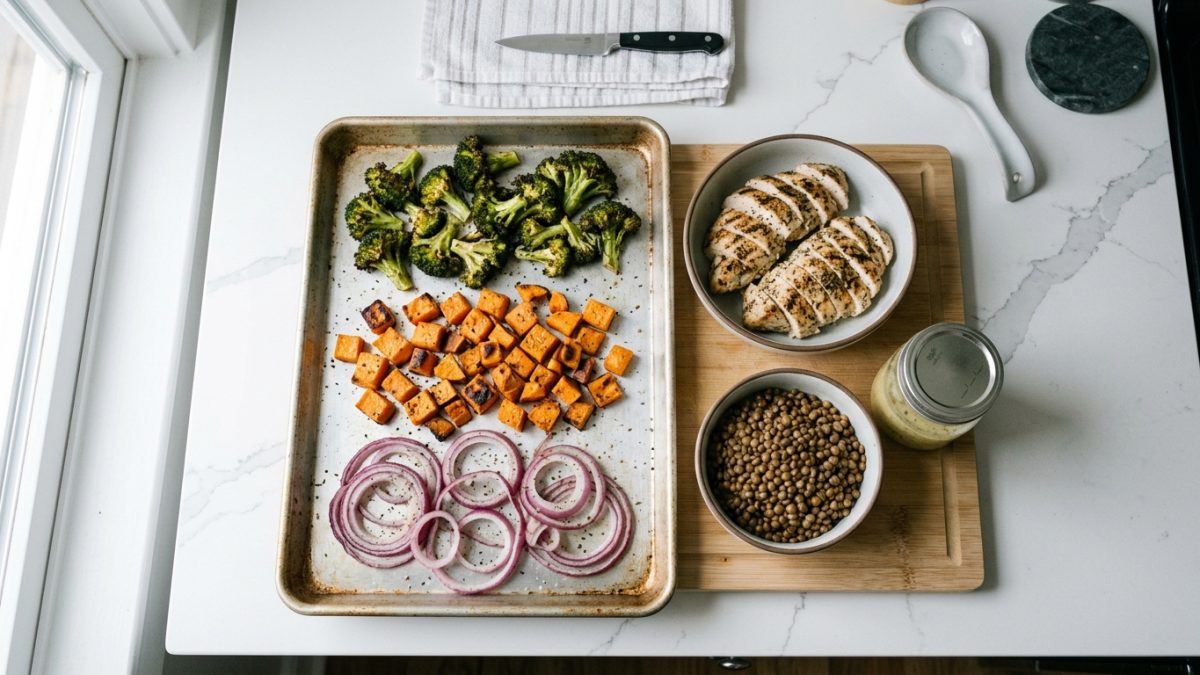
Sunday afternoon meal prepping has earned an unfortunate reputation: spending four hours in a hot kitchen, washing five sheet pans, and packing identical plastic containers of dry chicken breast and steamed broccoli that you dread eating by Wednesday.
There is a far more sustainable, culinary-forward methodology: Component Prepping utilizing the 3-2-1 framework. Instead of assembling finished casseroles, you batch prepare versatile base ingredients that can be mixed and matched in three minutes every morning.
Deconstructing the 3-2-1 Framework
3 Plant & Fiber Bases
Cooked ancient grain (quinoa, farro, brown rice) + 1 roasted cruciferous vegetable + 1 hearty raw leafy green (massaged kale or arugula).
2 Versatile Proteins
One plant-based protein (simmered French lentils or seasoned chickpeas) + one lean animal or egg protein (herb-roasted chicken thighs or hard-boiled pasture eggs).
1 Master Dressing
A high-polyphenol vinaigrette: cold-pressed extra virgin olive oil, Dijon mustard, apple cider vinegar, crushed garlic, and flake sea salt.
5 Distinct Workweek Lunches from One 45-Minute Prep
Because the components are stored individually in airtight glass containers, you prevent sogginess and can create distinct meals every single day:
- Monday (The Mediterranean Harvest Bowl): Warm farro, roasted sweet potato cubes, roasted chicken slices, massaged kale, crumbled feta, and Dijon vinaigrette.
- Tuesday (The High-Fiber Lentil Power Plate): Simmered green lentils, shredded cabbage slaw, diced avocado, pumpkin seeds, and a drizzle of olive oil and lemon juice.
- Wednesday (The Green Goddess Grain Salad): Fluffy quinoa, tender roasted broccoli, halved soft-boiled eggs, crisp cucumber, and green herb tahini dressing.
- Thursday (The Warm Protein & Roots Skillet): Roasted chicken, roasted sweet potatoes, and black beans warmed together with smoked paprika and sea salt.
- Friday (The Friday Kitchen Sink Salad): Remaining greens, a scoop of lentils, a scoop of quinoa, toasted sunflower seeds, and master vinaigrette.
Storage Science: Why Glass Beats Plastic
Nutrient preservation relies heavily on proper storage physics. Non-porous borosilicate glass containers prevent flavor cross-contamination, eliminate microplastic leaching from acidic dressings, and maintain crisp texture in leafy vegetables for up to five days.
Leave a Reply